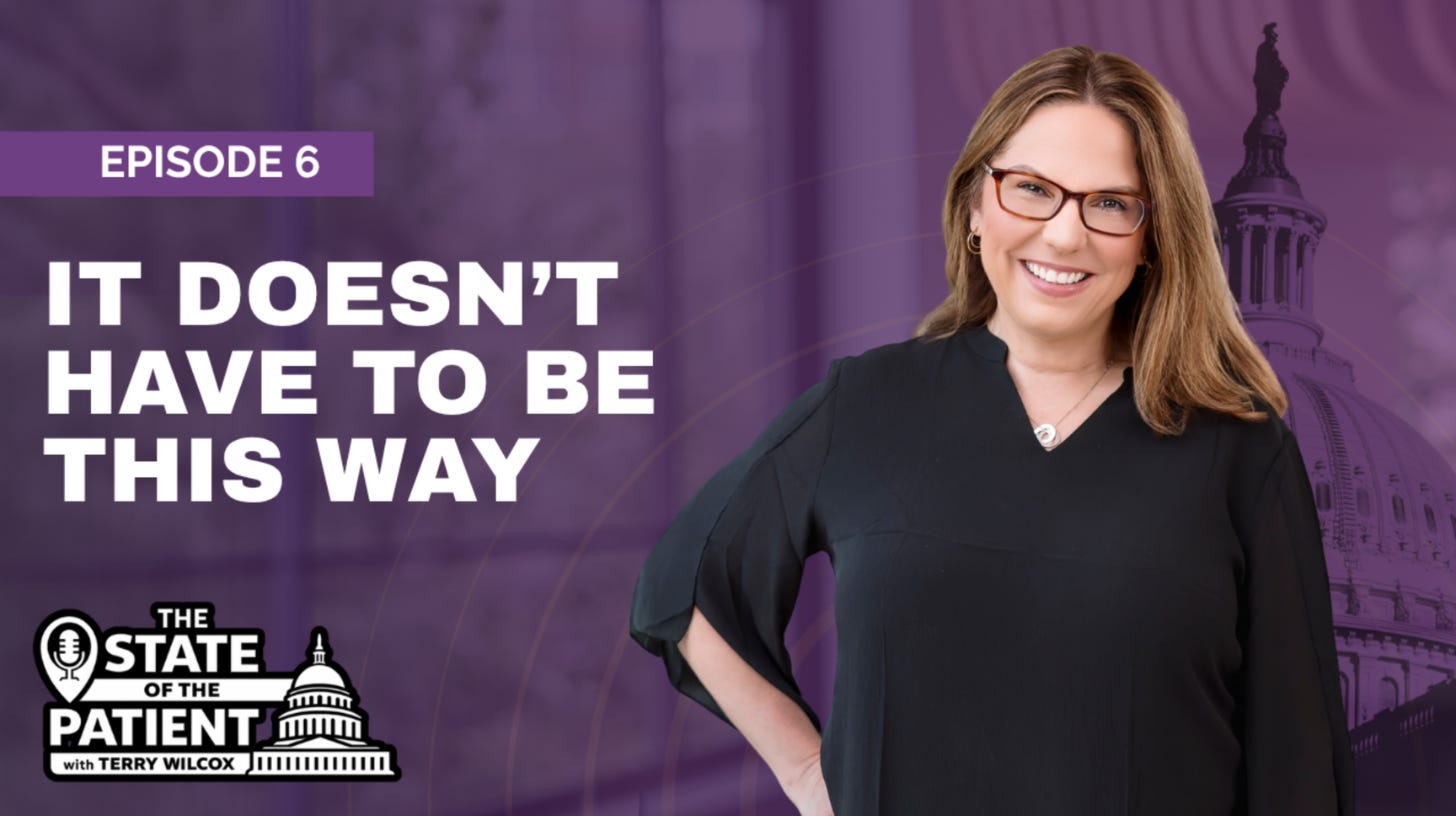
There is a sentence in this week’s episode that I haven’t been able to put down. It isn’t mine. It belongs to Alex Oshmyansky, M.D., from the years before he co-founded the Mark Cuban Cost Plus Drug Company, when he was a radiologist at Johns Hopkins working with children. His colleague Jon Horbaly, who has been the company’s chief financial officer almost from the beginning, told us the story. Alex would come out of a room where a family had just learned their child had cancer, and he could see a second fear arrive in the parents’ eyes right behind the first one: how they were going to pay for the medicine. He knew that many of those drugs were made from ingredients that cost pennies, marked up beyond recognition. And he said: it doesn’t have to be this way.
I said on the show that I would put that sentence on the wall of every advocacy office in the country, and I meant it. Most of what we fight in healthcare doesn’t present itself as a decision somebody made. It presents itself as the weather. A price is a price, a denial is a denial, a caregiver is on her own, and that’s just how it works. The most useful thing an advocate can do is refuse to believe that, and then go find out who actually decided it.
This Thursday we host the State of the Patient Summit on Capitol Hill, and in between our panels we’ll hand out the 2026 Rise Awards. Listening back to the interviews people recorded about this year’s honorees, I kept noticing that every one of them, in one way or another, had heard “that’s just how it works” and declined to accept it.
David Ridley designed an incentive for treatments nobody had a commercial reason to develop, and it was a good enough idea that Sherrod Brown and Sam Brownback carried it together. Brian Blase did a subtraction problem that was sitting in public data, and found more people receiving a benefit in some income brackets than actually lived in them. Deanna Darlington built rooms where policymakers had to meet the people their decisions touch, and then stayed after one of them to help a woman get through her insurance enrollment on the phone. Cynthia Fisher kept calling until two sentences about price transparency made it back into a State of the Union. Baylen Dupree refused to be edited, and a twelve-year-old boy in her audience told us the kids in his town don’t make fun of him anymore — they understand what they’re looking at. Dr. Elisabeth Potter scrubbed out of an operation to justify her sleeping patient’s care to an insurer, and then told the whole country what had happened.
And Kris McCabe has cared for her grandmother through Alzheimer’s for nine years, much of it live, in front of thousands of people who are doing the same thing in private and needed to see that it could be done out loud. When viewers ask whether her grandmother still knows who she is, Kris says, “I don’t let her forget me.” I don’t think I’ve heard a better description of what caregiving actually is.
Joe Grogan, who worked alongside Brian Blase in the White House, said something near the end of his interview that explains why an advocacy organization bothers with awards at all: unless we celebrate people like this, there won’t be nearly as many as we need. This work is mostly unpaid and mostly unglamorous, and it’s almost always done by someone who could be doing something easier. If we let it happen quietly, fewer people will choose it.
So this week, we’re saying it out loud. Listen to the episode, and if one of these stories reminds you of someone in your own life who refused to accept “that’s just how it works,” tell them. They probably haven’t heard it enough.