


It was March 13, 2020. The day before, my kids had come home from kindergarten, what would turn out to be their last normal school day for more than a year. The world was already beginning to shut down around us, yet I was completely oblivious to what was about to happen—not just to my family, but to families around the world.
That day, I took my stepmother to visit the assisted living facility where she and my father were about to move. The facility was only five miles from our home in Northern Virginia. For the first time since I was nine, my dad was finally going to live near me. I was excited to be able to help take care of him in this season. I already had my mother-in-law living with us, and my stepmom needed specialized support.
I look back on it now and realize what a privilege it was to be able to care for aging parents. If you happen to be in this season, oh I know how hard it is. I am right there with you. Just remember, in this season the days are long and days are limited. Hindsight is always 20/20. You will look back and second-guess decisions, but try to savor the moments.
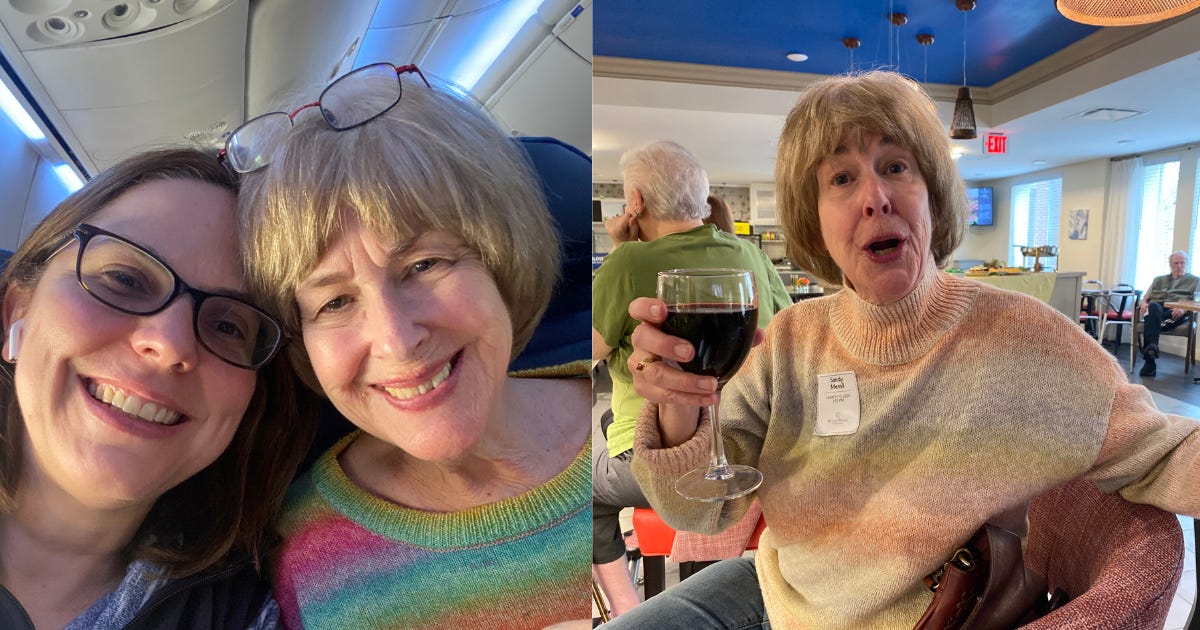
The assisted living facility held a St. Patrick’s Day celebration for residents on that Friday the 13th of March. I should have known to pause given everything unfolding in the world, but instead we celebrated her move. She was ready to move to Virginia. She was smiling, glass of wine in hand, and ready to make new friends and start her new life. There is a picture of her from that day, full of life, toasting her new tomorrows …
Four days later, everything changed.
On March 14, I received a frantic call from the assisted living facility telling me I had to get them moved in by March 17 or they would not be allowed in at all. There was no time and no real plan, only a hard deadline. My father was still in Denver with a broken leg. He was on dialysis and living with type 1 diabetes plus more health complications than anyone should have to bear. My stepmother’s Alzheimer’s had already advanced to the point where they could no longer care for each other.
There was no choice. I scrambled, called everyone I could, bought what we needed, coordinated flights, and somehow made it happen. My dad arrived on March 17, 2020. First I took them to my home, fed my dad, and let him see the boys. Then I watched them walk into the facility. I never saw my stepmom again until almost a month later.
They were placed in isolation because they had come from out of state. They were not even in the room we had chosen for them. My father was miserable. He hated the masks, the institutional (and very cold) food, the disorientation, and the feeling of being completely cut off from everything familiar. The only times I could see him were during his dialysis appointments three times a week. He also managed to come up with other appointments he needed just to escape the fresh hell he felt he was living in.
No one figured out how to fully quarantine a dialysis patient—or my dad—during COVID, and for that I will always be grateful. Had I not had to pick him up and take him to dialysis, I would have never seen him again when he went in on March 17th.
In those final weeks, I broke every rule you could possibly imagine. I brought him to see my kids whenever possible, even when it was not allowed, even when policy said it was not safe. Those stolen moments mattered more than any regulation. Policy could not understand what we were living through, but I could. I saw how frail he was. I knew my time with him was limited, even if I did not want to fully admit it.
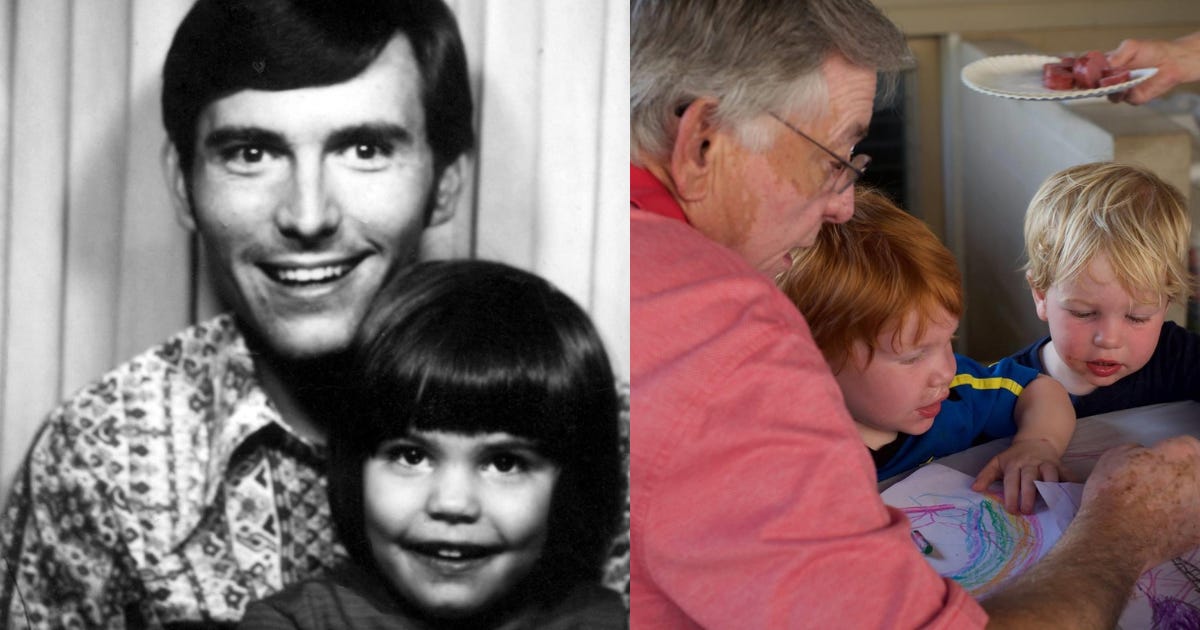
My father died on April 11, 2020, just three and a half weeks after we had gotten him there. He did not die from COVID. He died from everything else his body had been carrying for years—diabetes, heart disease, kidney cancer, a broken leg. Ten months later, on February 11, 2021, he was interred at Arlington National Cemetery.
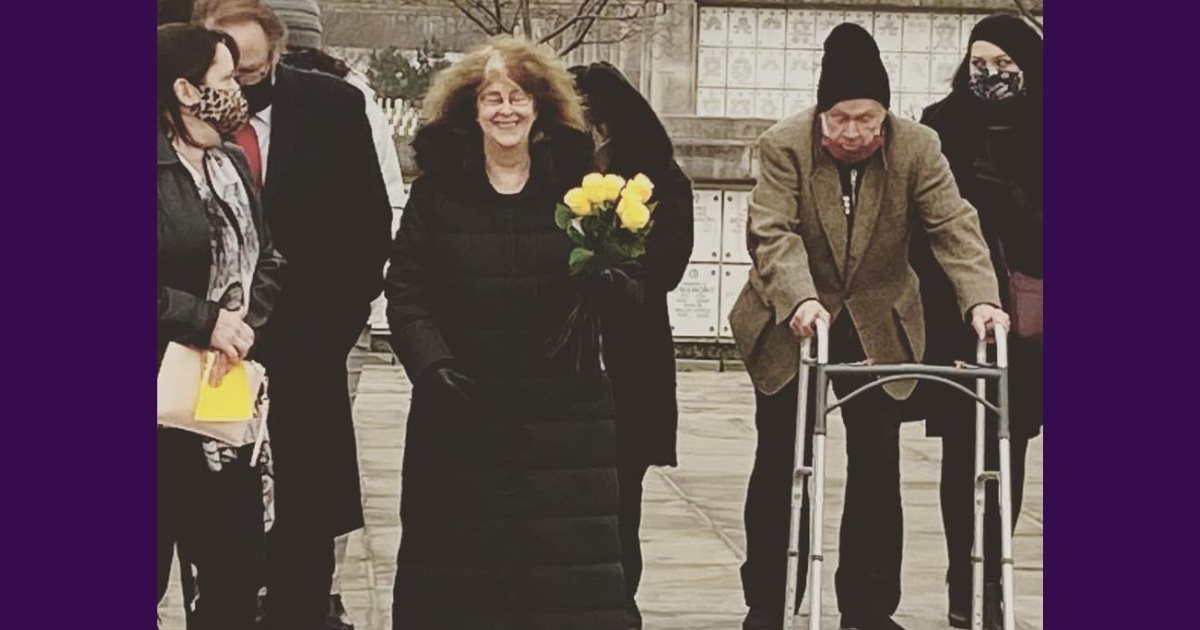
By then, my stepmother was already so far gone with Alzheimer’s that she brought a date from the facility to the funeral. When we arrived to pick her up, he got into the limo, walker and all, and proceeded to ride with the family. He was a nice fellow, but he did not belong at my dad’s funeral. At this point, I had not been able to see her in person in quite some time because of the lockdowns. Alzheimer’s had made her uninhibited, and honestly hard to be around. It gutted me inside. I knew my stepmom was in there somewhere, but I was having trouble finding her.
As the disease progressed, in her mind my father had not died. He had simply left her for another woman. When I tried to explain that he was gone, she looked at me with confusion, searching for a truth she could no longer hold onto. That was the moment I truly understood what Alzheimer’s takes from a person and from a family.
Eventually she had to be moved to Memory Care. And there she was truly alone. That was when I met Alzheimer’s not as an abstract idea or a clinical diagnosis, but as a daily reality. There is nothing worse than watching someone you love slowly disappear while they sit right in front of you. You begin to understand why some families eventually stop visiting. It is not because they do not care. It is because every visit becomes a fresh reminder of what is being lost, piece by piece. As I struggled—and still struggle—I found a great deal of grace for everyone going through this.
Despite the assisted living facility, I was still responsible for everything: her clothes, her dental care, her schedule, and her affairs. It felt like suddenly having a third child on top of my own kids, my home, my work, and the unrelenting chaos of a global pandemic. Even in a good facility, you remain the primary caregiver. You have to watch everything. Clothes disappear. Small details slip through the cracks. Dignity erodes in quiet ways. You are always on.
My stepmother had something rare: long-term care insurance of the kind that barely exists for new buyers anymore. This would be a different story without it. In 2025, her care costs $143,000 a year. Every month the transfer arrives, and every month I turn around and pay the bill. It has been an extraordinary gift, yet it remains completely out of reach for most American families.
Even when you manage the daily caregiving and somehow shoulder the crushing costs, you eventually hit another wall: access to meaningful treatment. Unfortunately, there are only disease management treatments available for my stepmom at this stage.
Today, patients with early-stage Alzheimer’s are being denied coverage for FDA-approved treatments not because the science is lacking, but because of policy. The Coverage with Evidence Development program treats these approved drugs as if they are still experimental. That signal does not stay contained. Private insurers follow Medicare’s lead, denying claims and labeling the therapies investigational. At the same time, even getting a diagnosis has grown more difficult with more prior authorizations, more delays, and more barriers. All of it steals time, and with Alzheimer’s, time is everything.
There is some hopeful movement in Congress. Last November, Representatives Vern Buchanan and Paul Tonko introduced the bipartisan Alzheimer’s Screening and Prevention (ASAP) Act. The bill would modernize Medicare coverage for preventive services by authorizing immediate coverage of FDA-approved blood-based biomarker tests for early detection of Alzheimer’s and related dementias. It aims to cut through the multi-year delays that currently leave families waiting too long for answers. Early detection cannot turn back the clock for my stepmom, but it could give so many other families more time to plan, pursue treatments, and explore clinical trials before the disease takes hold.
My stepmom is on hospice now. Not because she is dying tomorrow, but because Medicare will fully cover more of what she needs at this stage of the disease. There will be no heroics, and honestly, she would not want them. She is locked inside herself somewhere, unable to get out. Today when I visit, she looks right through me.
One of the things I am going to talk about a lot on here is becoming the CEO of your own healthcare. Sometimes we have to step into that role for the people we love. In this case, my stepmom did one thing right while she was still fully herself.
Her mother died from Alzheimer’s. She saw the writing on the wall early and took steps to plan. While she was still working, she secured long-term care insurance that has made an enormous difference in an otherwise heartbreaking journey. Most families do not have that kind of protection.
Patients do not experience policy. They experience the consequences of it. Both the good and the bad.
Alzheimer’s is already a long goodbye. We should not be shortening the time people have or delaying access to care simply because policy fails to understand what families are actually living through.
Have the conversation you have been avoiding. Ask your parents whether they have long-term care insurance, where their financial documents are, and what the plan is if they can no longer live independently. If you do not ask now, you will be forced to figure it out later in the middle of a crisis.
Build a dedicated healthcare safety net, whether through a Health Savings Account, long-term care insurance, or a separate savings strategy. You need money set aside specifically for health and care, because traditional insurance will not cover what you think it will. Medicare will basically cover everything once you go into hospice. Do not be forced to make that choice before you are ready.
Plan for time as well as money. Everyone plans for costs, but almost no one plans for who will manage the care, coordinate the appointments, or advocate when things go wrong. Caregiving is a full-time job. Decide now who will carry that responsibility.
Make a plan. Have the conversation. I will never stop replaying the tape in my mind of all the things I wish I had known, considered, and done. No matter who you are caring for, the truth is it’s hard to plan for something you hope you never have to live through, but even small steps and discussions can make a huge difference for you and your family.
If you are looking for deeper guidance, these five books have helped me personally navigate the practical, emotional, and planning realities of caring for aging parents and preparing for long-term care needs:
The 36-Hour Day: A Family Guide to Caring for People Who Have Alzheimer Disease, Other Dementias, and Memory Loss by Nancy L. Mace and Peter V. Rabins — Often called the “bible” for dementia caregivers, this comprehensive guide offers practical strategies for every stage of the disease, from managing daily challenges to self-care for the caregiver.
How to Care for Aging Parents by Virginia Morris — A thorough handbook that covers the full spectrum of elder care, including financial and legal planning, long-term care options, and difficult conversations about independence and future needs.
Creating Moments of Joy Along the Alzheimer’s Journey by Jolene Brackey — This uplifting resource focuses on practical ways to bring connection, dignity, and small joys into caregiving, helping families shift from loss to meaningful presence.
Being Mortal: Medicine and What Matters in the End by Atul Gawande — A thoughtful exploration of aging, serious illness, and end-of-life care that encourages honest planning and prioritizing quality of life over mere medical intervention.
A Bittersweet Season: Caring for Our Aging Parents—and Ourselves by Jane Gross — A candid memoir and guide drawn from the author’s own experience, blending personal stories with practical advice on the emotional and logistical sides of caring for aging parents.
These books do not replace professional advice, but they can provide comfort, tools, and perspective as you build your own plan.