


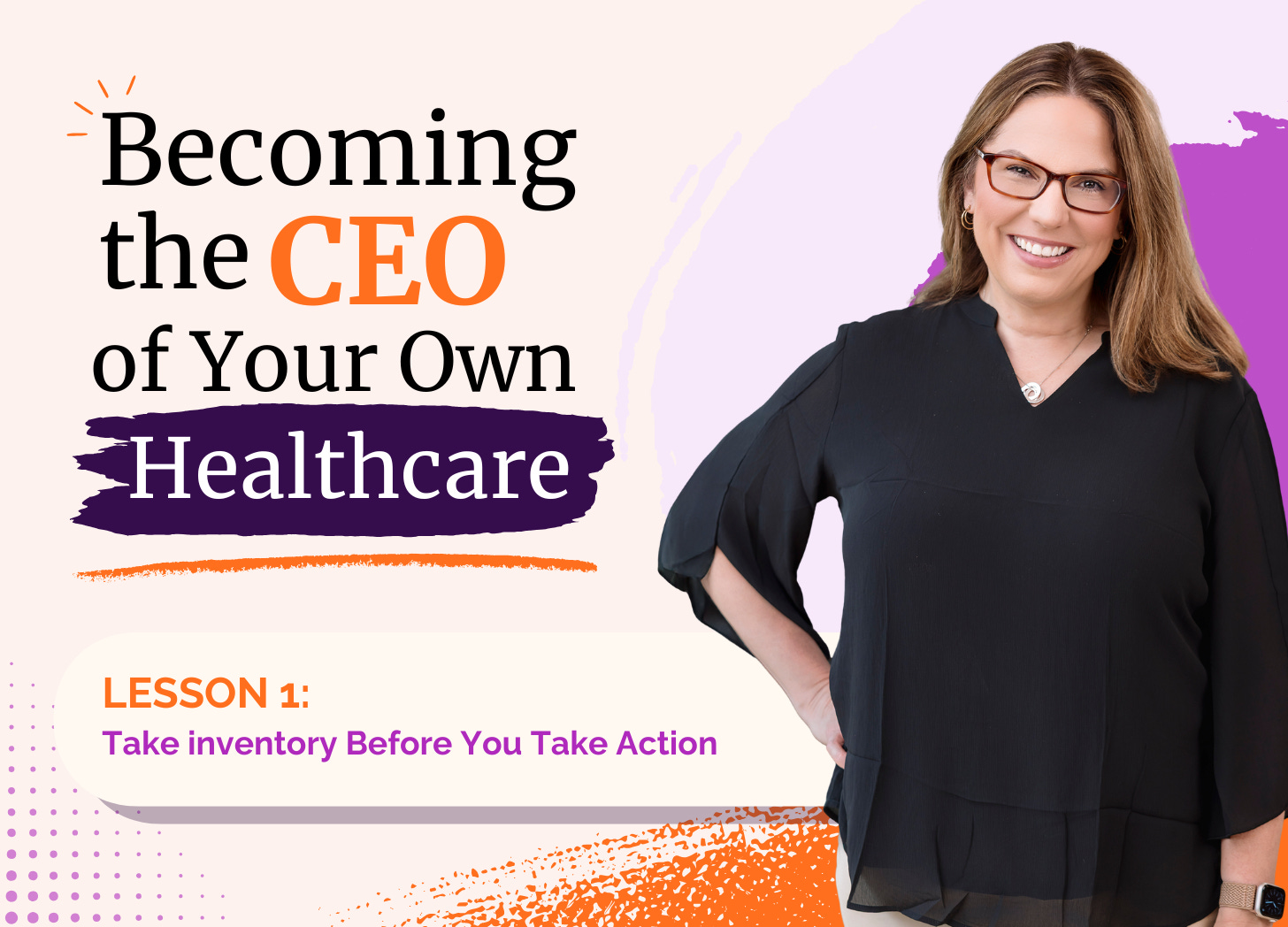
We spend endless energy complaining about the broken healthcare system in America.
Fair enough. It is broken in many ways.
But here’s the uncomfortable truth most people avoid:
Before you can effectively challenge or change the system, you first have to understand how you’re currently operating inside it.
And the vast majority of patients don’t.
They don’t know what their insurance actually covers.
They don’t know what tools, benefits, or programs are sitting unused in their plan.
They lack a single physician who truly owns the big picture of their care.
In other words, they’re running a high-stakes, multi-million-dollar personal enterprise—completely blind.
That is not how a CEO operates.
If you want to step into the role of CEO of your own healthcare, this is where it begins. Not with outrage. Not with policy battles. Not with trying to fix everyone else.
It begins with inventory.
1. Build Your Leadership Team
Every successful CEO has a strong leadership team. In healthcare, that team starts with one critical role: your point person—the physician who owns the 30,000-foot view of your health.
This isn’t just “whoever you listed on your insurance form.” This is the doctor who connects the dots when things get confusing, who catches what falls through the cracks, and who coordinates care across specialists.
Who that person is depends on your life stage and health reality:
If you’re generally healthy, it’s likely your primary care physician.
If you’ve faced cancer or a serious chronic condition, it may be your oncologist or specialist.
If you’re managing care for a child, it’s your pediatrician.
For many women, it’s a trusted gynecologist who knows their full history.
This individual is your hub. Your first call. Your strategic partner.
A true CEO knows exactly who sits in that seat, has their direct contact information, and knows how to get timely answers. Most patients have neither.
2. Know What You Actually Own
Your health insurance is not just another monthly bill. It is one of the most valuable assets you possess.
Yet most people treat it like an afterthought—something that “happens to them.” CEOs treat benefits as capital to be understood, leveraged, and protected.
When you don’t know what’s covered, predictable things happen:
You skip preventive screenings that are 100% paid for.
You miss wellness programs designed to keep you healthier.
You pay out-of-pocket for services that were already included.
This isn’t poor decision-making. It’s operating without the full balance sheet.
The shift is simple but profound:
Stop viewing your plan as passive coverage. Start treating it as an asset you actively manage.
Read the summary of benefits. Understand the network. Know your preventive care entitlements cold. The knowledge alone can save you thousands—and more importantly, protect your health.
3. Install Your Operating System
No serious CEO runs a complex organization with scattered notes, random logins, and sticky notes. Healthcare demands the same discipline.
Most patients operate in chaos: paper printouts from different offices, half a dozen patient portals, mismatched bills, and medical records scattered across providers like puzzle pieces with no box.
The system itself is not built to maintain a clean, centralized record for you. That quiet responsibility falls on the patient.
You don’t need a perfect, enterprise-grade solution. You need a functional operating system:
Download and actually use the apps from your insurance carrier and major providers.
Consolidate records where possible (many systems now allow you to request full records and upload them centrally).
Track visits, prescriptions, lab results, and bills in one place.
When you have visibility, you gain control. When you have control, you stop being a passenger and start steering.
This Is Where Leadership Begins
This isn’t the glamorous part of healthcare—no miracle drug, no viral outrage post, no dramatic policy fight.
It’s quieter. More foundational.
But everything else rests on it.
Once you have a clear point person, a deep understanding of your benefits as assets, and a working system to track your information, you stop merely reacting to the healthcare system.
You begin to lead it.
And that single shift changes everything.
What Comes Next
In the coming weeks, we’ll go deeper with real experts who live this world every day:
A plan benefit designer who architects the very insurance plans most of us use — and will reveal what’s actually negotiable and how to maximize what you’re already paying for.
A primary care doctor on the front lines who sees what happens when patients take ownership versus when they don’t.
Professionals who organize health records for a living — the people who turn scattered chaos into clean, actionable systems that actually work.
In Lesson 2, we move into territory most patients deliberately avoid:
What healthcare actually costs — and how to think clearly about spending your own money in a system deliberately designed to obscure those costs.
Because becoming the CEO of your healthcare isn’t just about gaining access.
It’s about mastering decision-making under uncertainty.
Join the Community and Take the Next Step
If today’s lesson resonates and you’re ready to move from reading to real action, I invite you to join our growing community at Patients Rising.
We’re building a national network of patient advocates who are committed to becoming their own best advocates — and ultimately learning to advocate effectively for others, whether it’s their family members or broader healthcare policy issues.
At Patients Rising we teach you how to do both.
Come join us.
Right now, you can take the Be Your Own Best Advocate Course — completely free.
It’s the perfect companion to this series, giving you practical tools, step-by-step guidance, and a supportive community of people walking the same path.
[Join the Patients Rising Community]